

A lot of homeowners in Dallas and San Antonio first notice foundation trouble in small, nagging ways. A door starts rubbing. A crack shows up above a window. The living room floor feels a little off, then not so little. By the time stair-step cracks appear in brick, worry usually moves in fast.
That's where the term micro pile foundation often enters the conversation. It sounds technical, but the idea is simple. When the soil near the surface keeps moving, a repair team may need to support the home from much deeper, steadier ground below.
For some houses, that kind of repair can be a powerful option. It can help when access is tight, when the soils are especially troublesome, or when a heavy part of the home needs support without tearing up the whole property. For a homeowner staring at cracks and wondering whether the problem can really be fixed, that matters.
Table of Contents
- Worried About Cracks? An Introduction to Micro Piles
- How Micro Pile Foundations Give Your Home Deep Roots
- Is a Micro Pile Foundation Right for Your Property?
- Comparing Micro Piles to Other Repair Methods
- The Micro Pile Installation Process Step by Step
- Choosing a Contractor and Protecting Your Investment
Worried About Cracks? An Introduction to Micro Piles
A homeowner in North Dallas might spot a zig-zag crack in the brick near the garage and hope it's cosmetic. A family in San Antonio may notice one bedroom door won't latch anymore, even though it worked fine a month ago. Those signs often point to movement below the house, not just wear and tear above it.
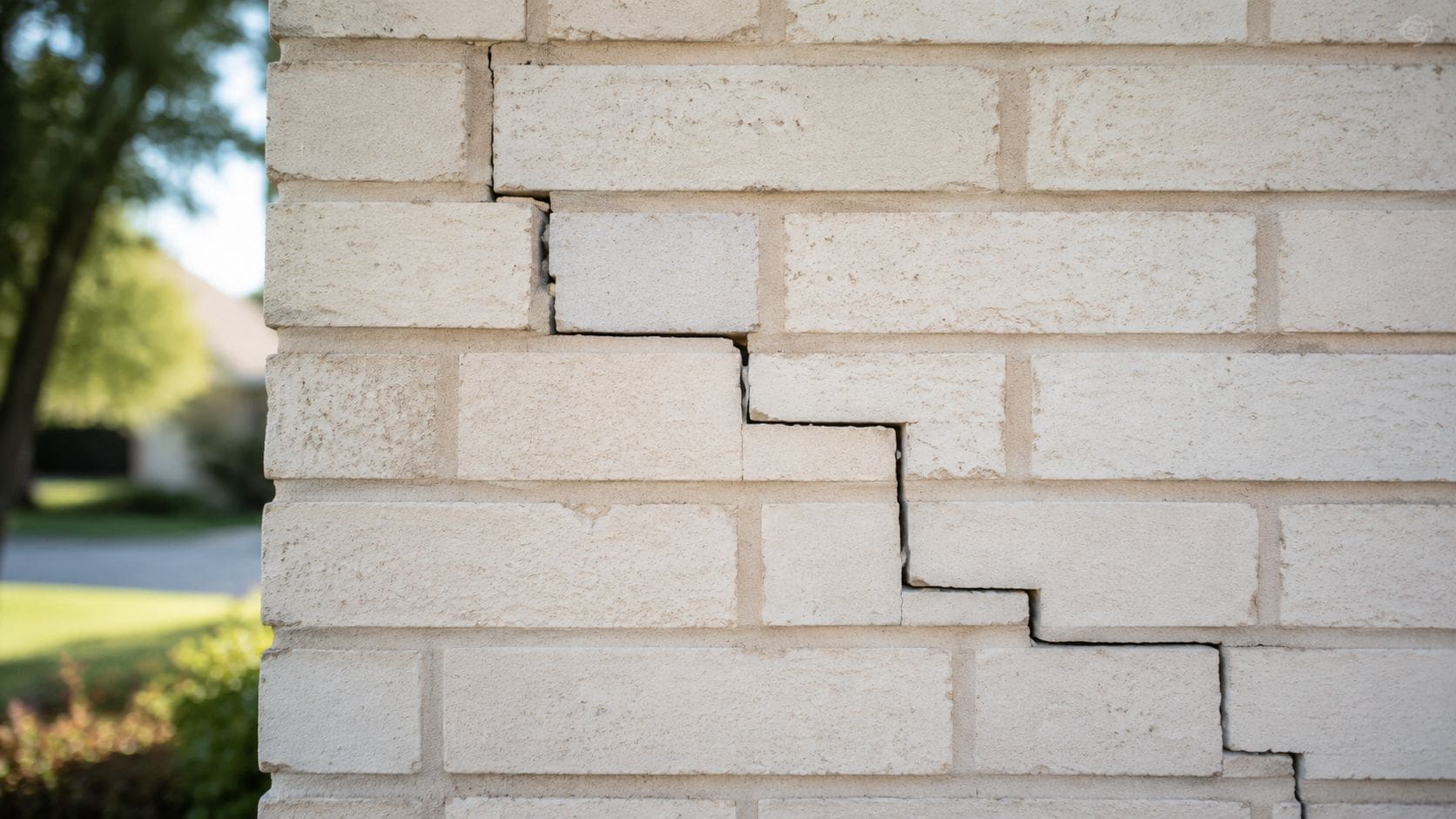
Texas homes deal with a tough opponent. The soil can swell when it gets wet and shrink when it dries out. That constant push and pull can make part of a slab sink, tilt, or lift unevenly. Homeowners usually feel that movement long before they know what to call it.
A micro pile foundation repair is one of the options used when surface soils can't be trusted to support the structure well enough. Instead of depending on the active soil near the top, the repair reaches deeper for support. That can be a relief for homeowners who feel like every season brings a new crack.
Cracks don't always mean a house is failing, but they do mean the home is talking. The smart move is listening early.
Micro piles can be especially helpful when other repair methods are hard to use. Some properties have narrow side yards. Some have mature landscaping close to the home. Some have additions, chimneys, or load-heavy corners that need more targeted support. In those situations, a smaller, deeper system can make sense.
Homeowners often get nervous when they hear a repair term they've never heard before. That's normal. The good news is that the basic idea behind micro piles is easier to understand than it sounds. They work a lot like giving a house deeper roots.
How Micro Pile Foundations Give Your Home Deep Roots
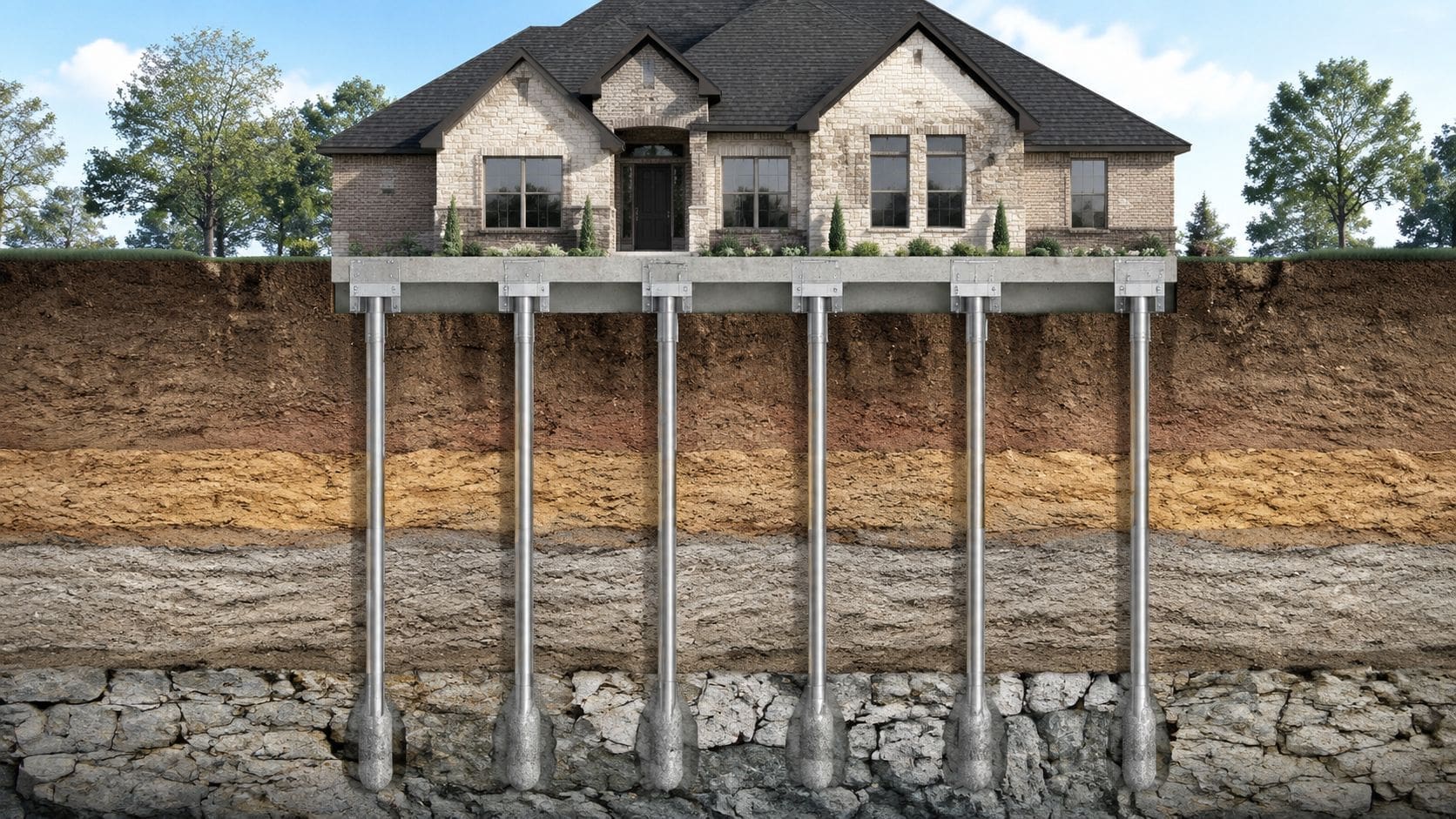
A tree with shallow roots struggles when the topsoil dries out or shifts. A tree with deep roots has a better grip. A micro pile foundation works on a similar idea. It helps carry a home's weight past the most troublesome soil and into a deeper, more stable layer.
Why shallow soil causes so many problems
Much of the ground in Texas contains expansive clay. That soil acts almost like a sponge. It swells when it takes on moisture and shrinks when it dries. A home built on top of that cycle can move in ways that stress brick, drywall, flooring, and door frames.
That's why a deeper support system matters. Micropiles are defined as grouted pile systems with a small diameter, typically less than 12 inches (300 mm), which is a key attribute for their use in confined urban spaces like those found in Dallas and San Antonio where traditional methods may be too disruptive (Caltrans micropile guidance).
Because they're relatively small in diameter, crews can install them in tighter spaces than some larger systems. That matters on homes with fences, narrow access, patios, or nearby structures that leave very little room to work.
How the piles carry the load
A micro pile is typically made by drilling a small hole, placing steel reinforcement, and filling or pressure-grouting the space so the pile bonds with the surrounding ground. The pile then helps transfer the building load downward through the weaker upper soils.
Picture it as pushing a table leg through loose carpet until it rests on something firm underneath. The carpet still exists, but it stops being the layer that decides whether the table wobbles.
A few details help homeowners make sense of why this system is trusted in difficult ground:
- Small but strong: Micropiles are typically 90 to 300 mm in diameter, so they fit where larger equipment or larger piers may struggle.
- Built for tough ground: They can be drilled through challenging materials such as cobbles, boulders, and expansive soils.
- Tested for movement: FHWA guidance states a micropile must sustain a test load of 0.5 times the design load with axial displacement at the pile head not exceeding 0.6 inches.
- Reliable bedrock connection: When socketed into bedrock, guidance calls for a minimum 3-meter (10-ft) rock core.
Practical rule: A homeowner doesn't need to memorize engineering terms. The key question is simpler. Is the repair bypassing the unstable soil that caused the problem in the first place?
Micro piles may also be installed at an angle when the load path or site conditions call for it. That can help spread forces in a smarter way, especially around tricky foundation areas. For a homeowner, the takeaway is simple. This system is designed to create steadier support below a house without relying on the upper soils that keep changing.
Is a Micro Pile Foundation Right for Your Property?
Not every settling home needs micro piles. Sometimes a different repair method, along with drainage work, soil injection, root barriers, slab foundation repair, or pier and beam repair, fits the property better. The right choice depends on the structure, access, and what the soil is doing at that specific address.

Homes that tend to benefit most
A micro pile foundation often makes sense when the usual options run into limits. According to FHWA technical guidance, micropiles are particularly effective in high-load applications and for deep foundation support in challenging substrates, including cobbles, boulders, and expansive soils, where minimal site disturbance is required.
That tends to match certain real-world Texas situations:
- Deep active clay soils: Some homes sit on ground that keeps moving too far down for a shallow fix to feel dependable.
- Tight access: A narrow side yard in an older Dallas neighborhood or a constrained urban lot in San Antonio can make larger equipment hard to use.
- Heavy load points: Chimneys, columns, corners, or additions can place concentrated stress on one part of the foundation.
- Sensitive surroundings: Homes close to landscaping, hardscapes, neighboring structures, or existing improvements may benefit from a less disruptive approach.
A homeowner doesn't have to guess alone. A careful inspection should map where the house is moving, which areas are most affected, and whether the support problem is local or widespread.
When another repair may make more sense
Micro piles are powerful, but they aren't the answer to every crack. If drainage is the main issue, drainage solutions may be the first priority. If vegetation is pulling moisture unevenly from the soil, root barriers may matter. If a slab or pier and beam system shows movement in a pattern better matched to another underpinning system, a different repair approach may be more practical.
A helpful way to think about it is this:
| Property condition | What it may point toward |
|---|---|
| Surface water sits near the house | Drainage correction may need attention first |
| Tree-related moisture swings near the perimeter | Root barriers may be part of the repair plan |
| Limited access and deeper unstable soils | Micro piles may be a strong fit |
| Broad settling in a more open work area | Another piling method may be suitable |
The best repair isn't the fanciest one. It's the one that matches the soil, the structure, and the way the lot is laid out.
That's why homeowners should be cautious with one-size-fits-all answers. A serious foundation repair plan should fit the property like a custom-made boot, not a borrowed one.
Comparing Micro Piles to Other Repair Methods
Homeowners often hear several repair terms in one conversation and leave more confused than when they started. Micro piles, helical piles, driven concrete piles, and pressed push piers all aim to support a settling structure. The difference is how they reach support and how well they fit local conditions.
One of the biggest homeowner questions is cost versus long-term value. In Texas, micropiles can have 15% higher upfront costs, but they often provide 40% lower long-term maintenance in expansive soils due to better bond-zone integration with the surrounding ground. That doesn't mean they're always the best buy. It means the cheaper option at the start may not stay cheaper over time.
Foundation Repair Method Comparison for Texas Homes
| Method | How It Works | Best For | Expansive Clay Soil Suitability |
|---|---|---|---|
| Micro piles | Small-diameter drilled and grouted piles transfer load to deeper stable ground or rock | Tight access, heavy loads, deeper unstable soils, sensitive sites | Strong choice when shallow clay movement is a major concern |
| Helical piles | Steel shafts with helix plates screw into the ground | Sites where torque installation works well and access is manageable | Can work well, but suitability depends on soil profile and load demands |
| Driven concrete piles | Precast concrete members are driven below the home to support the structure | Many slab foundation repair situations with room to work | Often effective for Texas homes, especially where conditions fit driven systems |
| Pressed push piers | Steel piers are hydraulically pushed into the ground using the structure's weight | Homes where load and access allow hydraulic installation | Can perform well, but results depend on depth to competent bearing and site conditions |
For homeowners comparing options, it helps to understand that no method wins every category. Some systems are more familiar and may be appropriate for many homes. Others, like micro piles, stand out when conditions are tougher or access is more restricted.
Homeowners looking into durable steel piling solutions will often notice the same theme. The right system depends on soil behavior, structure weight, and whether the crew can physically reach the problem areas without creating unnecessary disruption.
What this means for a homeowner
A homeowner in Dallas with a narrow side yard and a load-heavy chimney may not be choosing between “good” and “bad” methods. The choice may really be between a method that fits the site and one that fights the site.
A family in San Antonio may also need a plan that goes beyond underpinning alone. If poor drainage keeps feeding soil movement, the smartest repair could combine deep support with drainage solutions or soil injection. If large trees are involved, root barriers may become part of the long-term protection plan.
The best comparison question isn't “Which method is cheapest?” It's “Which method solves the actual reason this home is moving?”
The Micro Pile Installation Process Step by Step
Most homeowners expect foundation work to feel mysterious and chaotic. A micro pile project is usually much easier to follow when it's broken into plain steps.
What happens at the house
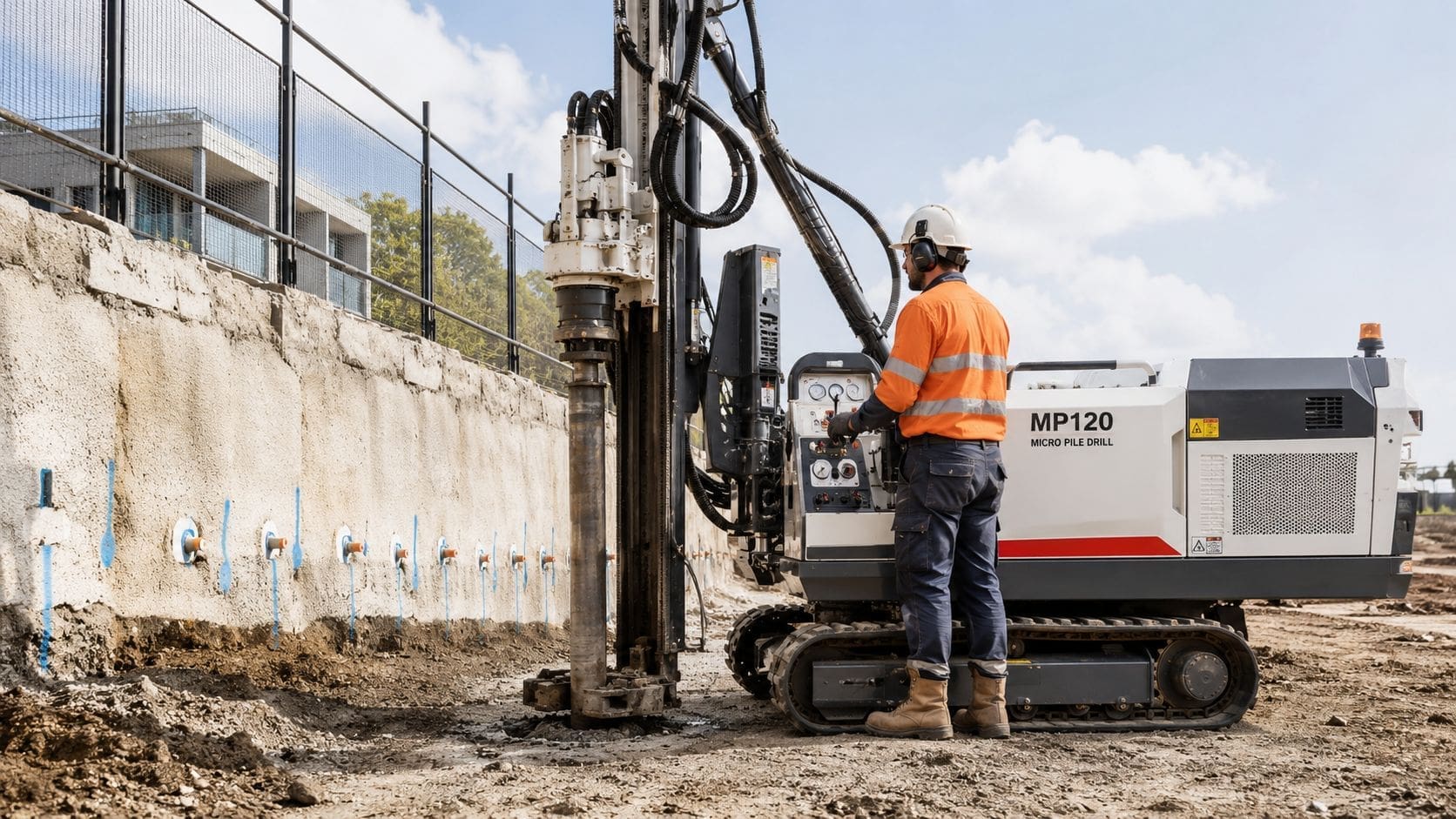
The crew starts by preparing access points and identifying the locations where support is needed. Small drilling equipment is then used to create the holes for the piles. Because micropiles are small in diameter, the work can be more manageable in confined areas than many homeowners expect.
Next comes the structural part of the pile. Steel reinforcement is placed, and grout is pumped into the drilled hole so the pile can bond with the surrounding ground. That grout is a big reason the system performs well in difficult soils.
Then the foundation support is connected and adjusted. If the repair plan includes lifting, crews raise the affected area carefully and in stages. The goal isn't to force the house into perfection. The goal is controlled improvement without causing new stress.
For homeowners familiar with residential concrete piling solutions, this process feels different because the pile is formed in place rather than driven as a precast element.
How crews plan pile layout
Spacing matters. During installation, the minimum spacing between adjacent micropiles must be at least three times the pile diameter, such as 36 inches for a 12-inch pile, to prevent interference and ensure each pile can support its intended load (practical foundation design guidance).
That rule helps explain why repair plans don't place piles randomly wherever there's room. The layout has to give each pile enough working distance so it can do its own job without weakening the next one.
A homeowner will usually see the project unfold in a sequence like this:
- Marking and prep: The crew identifies target areas, protects nearby surfaces, and sets up access.
- Drilling: Small-diameter holes are drilled at planned points beside or beneath the foundation support area.
- Reinforcement and grout: Steel goes in, then grout forms the bonded pile.
- Load transfer: Brackets or structural connections shift support to the new piles.
- Adjustment and cleanup: The structure may be lifted toward level, then the crew restores the work area.
A good crew should be able to explain what the homeowner will see each day, where equipment will go, and what kind of cleanup to expect before work begins.
That clarity matters. Foundation repair is stressful enough without surprises in the driveway or flowerbeds.
Choosing a Contractor and Protecting Your Investment
Micro piles aren't an experimental trick. Micro pile foundations were formally standardized in the FHWA-SA-97-070 document from the U.S. Federal Highway Administration in 1997, marking their transition to a recognized, code-supported method for critical foundation support (FHWA-SA-97-070 document). That should give homeowners confidence, but it doesn't remove the need to choose the right contractor.

Questions worth asking
A solid contractor should welcome detailed questions. Homeowners in Dallas or San Antonio should ask how the company evaluates expansive clay, how it decides between slab foundation repair methods, and whether the plan also accounts for drainage solutions, soil injection, root barriers, or pier and beam repair when those services are relevant.
This short checklist helps:
- Ask about soil conditions: What signs show the upper soils are causing movement?
- Ask about fit: Why is a micro pile foundation a better match here than another method?
- Ask about disruption: What equipment will be used, and how will the crew protect nearby surfaces?
- Ask about support after the job: What happens if movement shows up later?
Homeowners who want help learning how to spot red flags in contractors can use that guide to prepare smarter questions before signing anything.
Why warranty protection matters
Even a well-designed repair is a major investment. The warranty behind that work matters almost as much as the work itself. A homeowner shouldn't only ask whether a warranty exists. The better question is who stands behind it if the original company ever isn't around.
That's why many Texas homeowners take time to compare foundation repair companies in Dallas with special attention to long-term warranty protection, transferability, and what support really looks like after closing.
A good repair plan should help a homeowner sleep better, not leave them wondering who will answer the phone years later.
Homeowners dealing with cracks, uneven floors, sticking doors, or drainage-related foundation movement don't have to sort through it alone. Advanced Foundation Repair serves Dallas, San Antonio, and surrounding Texas communities with repairs for existing foundations, including slab foundation repair, pier and beam repair, soil injection, drainage solutions, and root barriers. They are also the only foundation repair company in Texas backed by the Texas Foundation Warranty Trust, which protects customers even if the company ever closes. Call Advanced Foundation Repair or schedule a free inspection to find out whether a micro pile foundation is the right fit for the home.