
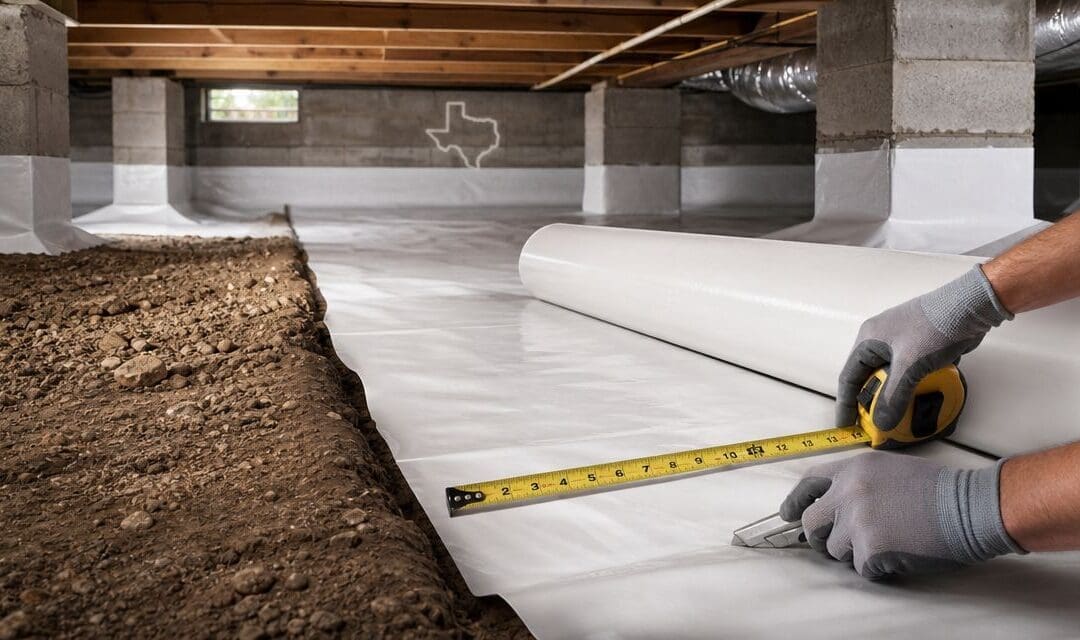
Most homeowners can expect a vapor barrier installation cost of about $1,200 to $4,000 for a crawl space. In Texas, that price is often just one part of a bigger moisture-control plan, because the final cost depends on the crawl space size, access, cleanup needs, and whether the home also needs drainage or foundation-related work.
A lot of homeowners in Dallas and San Antonio start with a smell. The house seems fine, but there's a damp, stale odor near the floors. Maybe the air feels heavy. Maybe the wood floors feel a little uneven, or a crack near a doorway seems wider than it used to be. That's often when the crawl space finally gets attention.
What makes this tricky is that a vapor barrier sounds simple. Roll out plastic, cover the dirt, and call it done. But under a Texas home, moisture rarely stays in one lane. It affects soil, wood, air quality, and foundation movement all at once. That's why the true question isn't only “What does a vapor barrier cost?” It's “What does the home need so the problem doesn't come back?”
Table of Contents
- That Musty Smell Might Be a Foundation Warning
- What a Vapor Barrier Does for Your Texas Foundation
- Breaking Down Vapor Barrier Installation Costs
- Key Factors That Influence Your Final Price
- DIY vs A Professional Solution The Real Cost of Cutting Corners
- Sample Cost Scenarios for Texas Homeowners
- Your Next Step to a Dry and Stable Foundation
That Musty Smell Might Be a Foundation Warning
A homeowner notices a musty smell in the hallway every morning. The air conditioner is running, windows stay shut, and the house looks clean. But the odor keeps coming back. Under many pier and beam homes, especially in older parts of Dallas and San Antonio, that smell starts in the crawl space.
When the soil under the house stays damp, water vapor rises. That moisture can hang around under the floor framing, soak into wood, and make the crawl space feel clammy. Sometimes the first warning is smell. Sometimes it's cupped flooring, soft spots, or doors that don't quite swing right anymore.
That's where a vapor barrier enters the picture. It helps separate the damp soil from the space under the home. But homeowners usually get confused because they hear one price online and expect one simple fix. In reality, vapor barrier installation cost depends on what's happening under the house, not just the material itself.
A familiar Texas pattern
Many homes don't just have a moisture issue. They have a site drainage issue that keeps feeding the crawl space. Water may move toward the house during storms, collect near the perimeter, and keep the soil under the structure wet longer than it should. Homeowners who want a broader look at exterior water management can also review this guide to Lakeway drainage installation for a plain-language example of how drainage planning affects moisture around a home.
For readers trying to connect the dots, these common crawl space problems often show up together. Damp air, standing moisture, wood trouble, pests, and floor movement rarely stay isolated for long.
Moisture under a house doesn't always announce itself with a puddle. Sometimes it starts with odor, humidity, and subtle movement in the floors.
A vapor barrier can be a smart part of the solution. It just shouldn't be treated like a magic sheet of plastic that fixes every moisture problem by itself.
What a Vapor Barrier Does for Your Texas Foundation
A vapor barrier covers the exposed soil in a crawl space so ground moisture has a harder time rising into the space under your home. That sounds simple, but the effect reaches farther than many homeowners expect.
In Texas, especially around Dallas and San Antonio, crawl-space moisture is rarely just a comfort issue. It can become part of a bigger foundation problem. Expansive clay soils in these areas react to water like a sponge and then dry back out. That cycle puts stress on the structure above, particularly when moisture levels stay uneven around and under the house.
A good way to picture the barrier is this. The soil keeps giving off moisture day and night, even when you do not see standing water. The barrier acts like a lid over that damp ground, slowing how much moisture gets into the crawl space air and nearby materials.
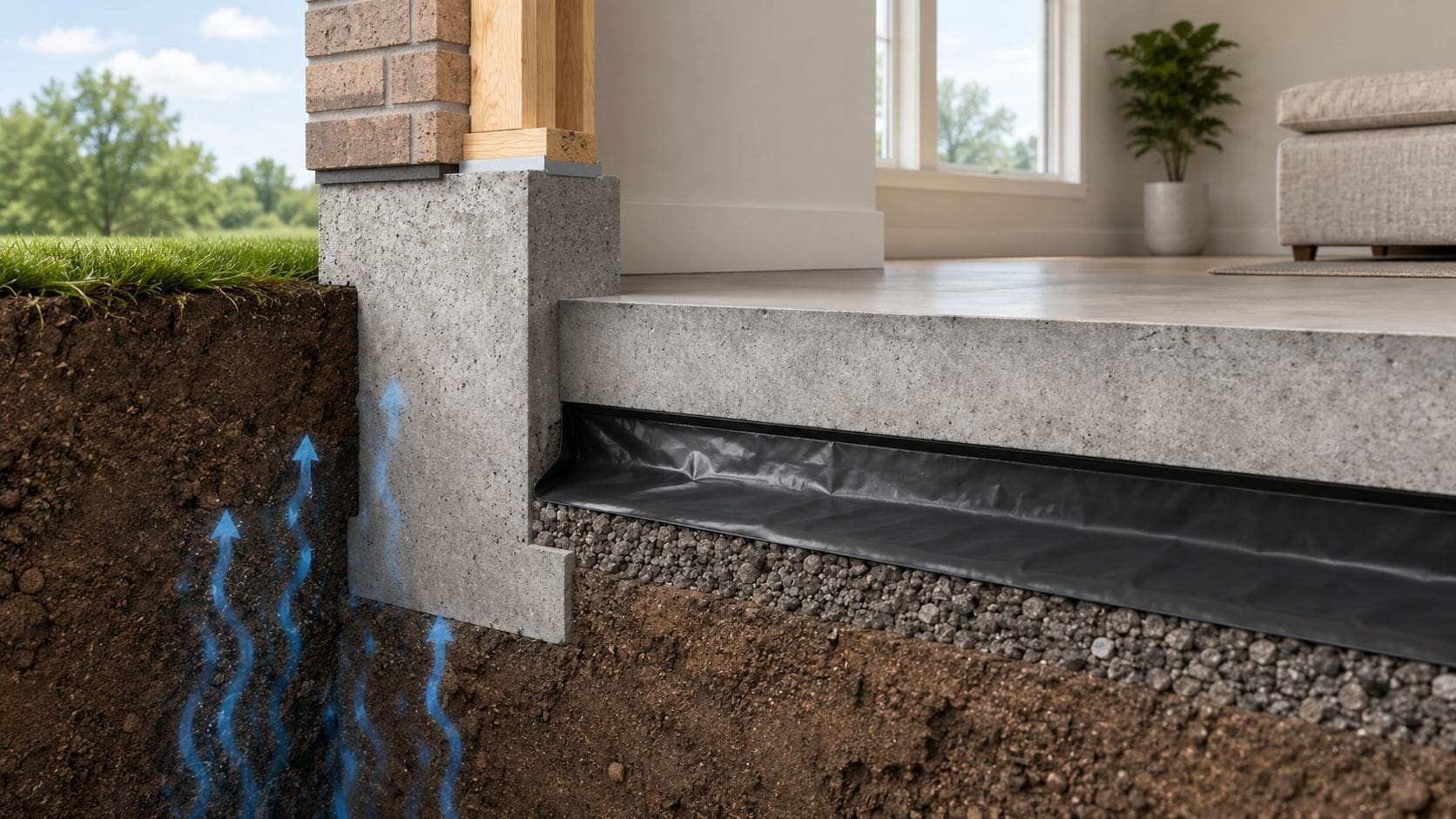
A commonly cited market estimate puts crawl-space vapor barriers at $1.35 to $2.00 per square foot for material and labor, with a typical installed total of about $1,500 to $4,000. That same estimate notes that thicker film, custom cut-and-fit work around piers or columns, and more detailed sealing raise labor time and push the price higher, while simpler dirt-floor layouts usually stay lower on the range, according to this crawl space vapor barrier cost overview.
That cost range makes more sense once you look under a real Texas home. Many crawl spaces have tight access, utility lines, support piers, and uneven surfaces. Installing the barrier well means fitting it around all of those obstacles instead of just rolling out plastic and calling it done.
Why this matters in Dallas and San Antonio
In North Texas and Central Texas, moisture control and foundation protection go together. If soil under one part of the home stays wetter than another, the support conditions can change over time. Homeowners may notice:
- Wall cracks: Small cracks can show up when one area of the house moves differently from another.
- Uneven floors: Floors may feel soft, sloped, or slightly out of level.
- Door and window trouble: Frames can shift enough to make doors stick or windows bind.
- Pier and beam stress: In crawl-space homes, joists, beams, and piers all depend on more stable conditions below.
A vapor barrier does not reverse foundation settlement or repair structural damage. What it does is reduce one of the inputs that keeps feeding trouble. That matters because foundation repair in Dallas or San Antonio usually costs far more than moisture control done at the right time.
Here is the bigger picture homeowners often miss. A vapor barrier works best as one part of a total foundation protection plan. If drainage sends water toward the house, if roots are drying one side more than the other, or if movement has already started, the barrier helps but it cannot carry the whole load by itself.
That is why the smart question is not just, "What does the barrier cost?" It is, "What expensive problem might this help me avoid?" In Texas clay soil, that long-term view usually makes the investment easier to understand.
Breaking Down Vapor Barrier Installation Costs
Homeowners usually want the numbers first. That makes sense. The challenge is that the numbers change depending on whether the job is a basic vapor barrier or part of a larger encapsulation project.
A widely cited homeowner benchmark puts vapor barrier installation in a crawl space at about $1,200 to $4,000, while a broader crawl-space encapsulation project typically runs $3 to $10 per square foot or $3,000 to $15,000 total, depending on size and condition. The same benchmark also notes that basic encapsulation commonly costs $2 to $4 per square foot, which shows how strongly pricing ties to square footage and scope rather than one flat number, as summarized in this crawl space encapsulation cost guide.
Basic barrier versus full encapsulation
Many people often find this confusing.
A basic vapor barrier usually means covering the crawl space ground to reduce rising moisture. A full encapsulation is broader. It may involve sealing more of the space and adding other moisture-control measures. So when two contractors give very different prices, they may not be pricing the same thing.
Here's a simple way to understand it:
- Basic vapor barrier: Usually focused on the dirt floor.
- Expanded moisture-control scope: May include more sealing and prep.
- Full encapsulation: A larger system with a wider moisture-control goal.
If the home already has damp soil, wood concerns, or outside drainage problems, the low-end quote may leave out the very work that makes the barrier last.
Estimated Vapor Barrier Installation Costs 2026
| Service Scope | Price Per Square Foot | Typical Project Total |
|---|---|---|
| Basic vapor barrier installation | Qualitatively varies by layout and labor | $1,200 to $4,000 |
| Vapor barrier installation common market range | $1.35 to $2.00 per sq ft | $1,500 to $4,000 |
| Basic encapsulation | $2 to $4 per sq ft | Qualitatively varies by scope |
| Broader crawl-space encapsulation | $3 to $10 per sq ft | $3,000 to $15,000 |
A table like this helps with budgeting, but it doesn't replace an inspection. Two homes with similar square footage can still land far apart on price if one crawl space is clean and open while the other is cramped, muddy, and full of obstacles.
The price tag makes more sense when the homeowner asks, “What work is included?” instead of only “What's the total?”
That question usually reveals whether the estimate covers prep, sealing detail, cleanup, and moisture-related corrections, or only the plastic on the ground.
Key Factors That Influence Your Final Price
A homeowner in Dallas can have a modest crawl space and still get a higher quote than a neighbor with a larger one. The reason is simple. Installers are pricing the work around the space, not just the square footage on paper.
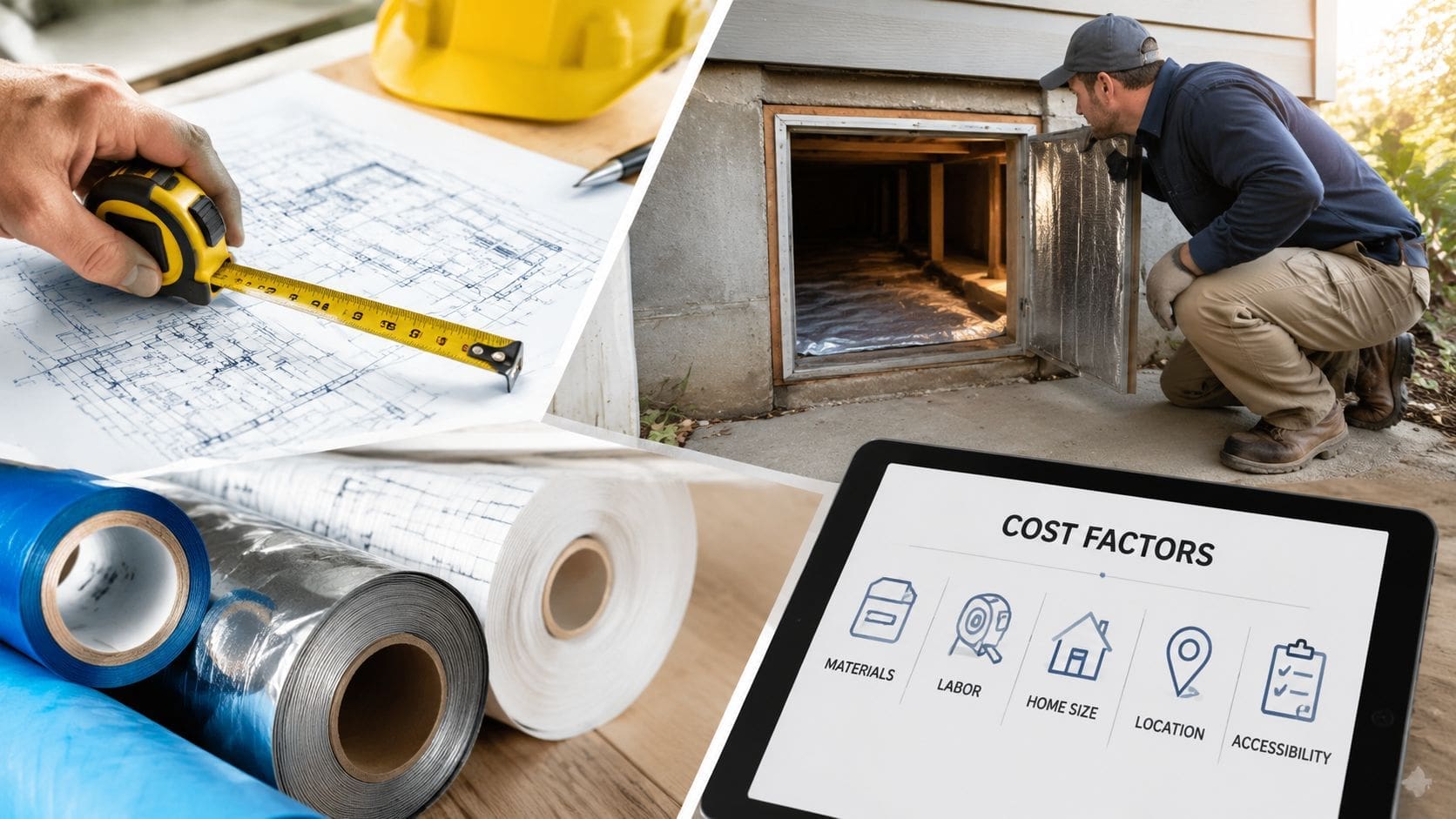
In Texas, a vapor barrier is usually one part of a bigger foundation protection plan. Dallas and much of North Texas deal with expansive clay soils that swell when wet and shrink when dry. San Antonio homes often face shifting soils and drainage patterns that can keep moisture too close to the foundation. If the crawl space stays damp, the barrier alone cannot carry the whole load. The crew may need to correct the conditions that are feeding the moisture in the first place.
Labor often drives the price more than homeowners expect
Installation gets more expensive when the crawl space fights the crew every step of the way. A low-clearance area slows movement. Tight openings make it harder to bring in material. Piers, plumbing lines, and ductwork create more cuts, more fitting, and more sealing.
Ground conditions matter too. If the soil is uneven, muddy, or covered with debris, the area has to be prepared before the barrier can lie flat and stay in place. Industry guidance from HomeAdvisor's crawl space encapsulation cost overview notes that accessibility, cleanup, repairs, and the amount of sealing involved can all change the final cost.
That matters because labor is what turns a simple job into a time-consuming one.
Site conditions can raise the scope
Some homes need more than a sheet of plastic on the ground. If outside water is finding its way toward the foundation, the barrier may need to be paired with drainage improvements or foundation-related repair work. On pier and beam homes, that can include correcting moisture sources before they keep affecting beams, joists, and soil conditions below the house.
For slab homes, moisture problems sometimes point to plumbing concerns under the foundation. In those cases, expert under slab tunneling may become part of the broader repair plan. That is not part of every vapor barrier job, but it shows why one estimate can look much higher than another.
Material choices still matter, but fit matters more
Homeowners often ask about thickness first. That is reasonable, but the better question is whether the material and installation method match the crawl space conditions. A barrier in a clean, open area with stable ground is one kind of project. A barrier that has to wrap around supports, seal edges carefully, and hold up in a damp Texas crawl space is another.
A good installer is pricing for durability, not just installation day.
Here are the factors that commonly change the final number:
- Access difficulty: Low clearance and small entry points increase labor time.
- Prep work: Debris removal, grading, and drying the area add time before installation begins.
- Obstructions: Piers, pipes, and ductwork require more cutting and sealing.
- Moisture corrections: Drainage or related foundation work may be needed so the barrier can do its job as intended.
- Inspection quality: Careful contractors spend more time checking the space and explaining what is included.
The safest way to compare bids is to compare scope line by line. A contractor checklist like the Moore Construction Co. contractor guide can help homeowners ask better questions before signing anything.
The lowest price often belongs to the estimate that assumes the crawl space is already dry, clean, and problem-free. Texas homes often need more than that.
That is why this cost should be viewed as protection spending, not just install spending. Paying for the right prep and moisture control now can help you avoid much larger foundation repair bills later, especially in Dallas and San Antonio where soil movement and moisture swings can punish a home over time.
DIY vs A Professional Solution The Real Cost of Cutting Corners
A lot of homeowners look at the crawl space and think the same thing. Plastic is plastic. Why not buy the material and save the labor?
That instinct is understandable. But crawl spaces punish shortcuts.
Why cheap can become expensive
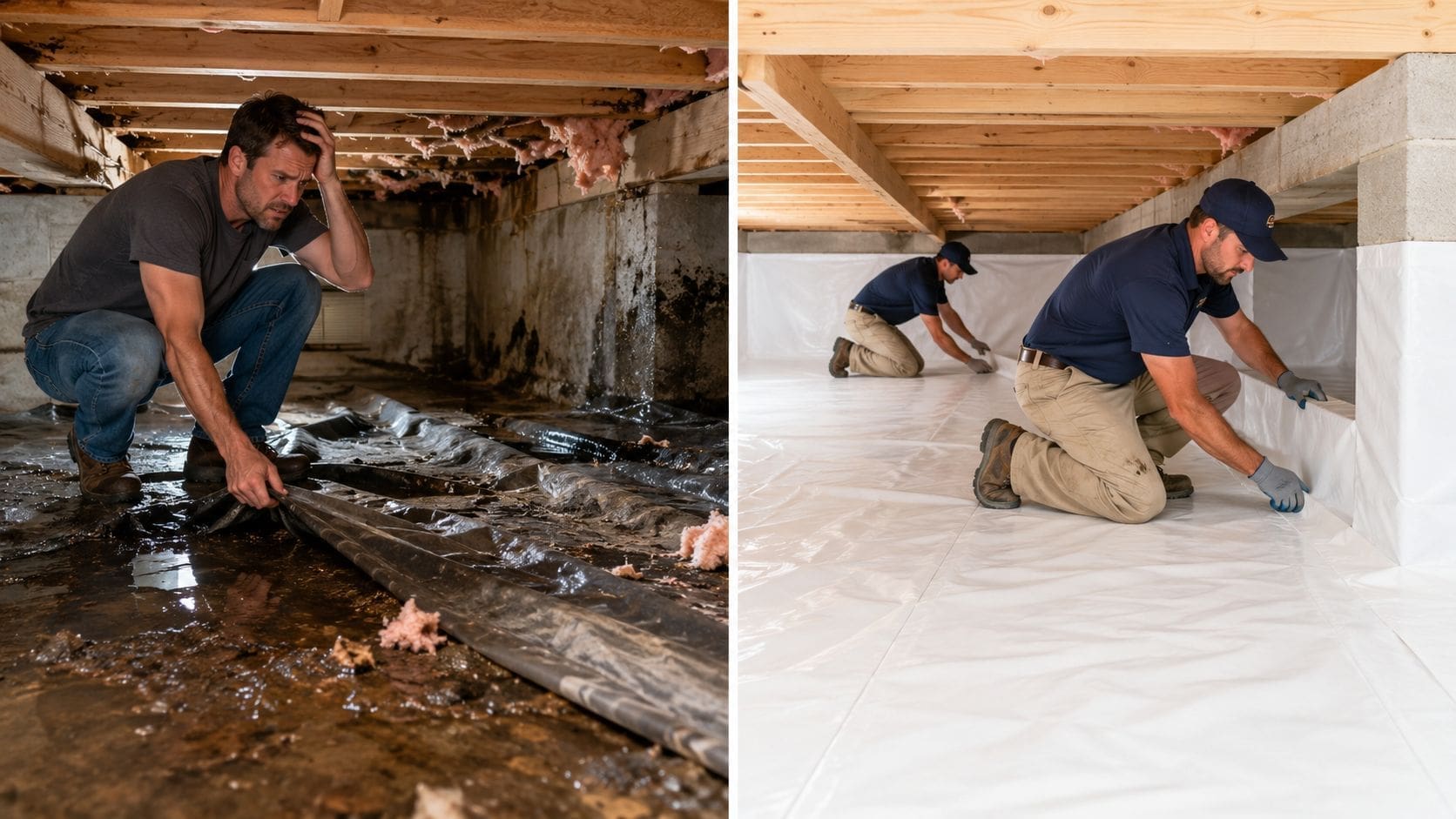
Some industry guidance points to a problem homeowners don't always consider first. A cheaper barrier can turn into a repeat expense if the install quality or material thickness isn't good enough to last. Reported material costs range from about $0.25 to $0.70 per square foot, with thicker products costing more, and one industry video argues directly that a low-priced install can cost more over time if it has to be replaced sooner, as discussed in this guide on vapor barrier installation cost and durability.
That long-term view matters in Texas. If the barrier tears, shifts, or gets poorly sealed around supports, the crawl space may go right back to trapping moisture where it shouldn't. Then the homeowner pays again for access, cleanup, labor, and another install.
A low quote can also miss the root problem. If water is entering from outside, the barrier alone won't fix that. If foundation movement has already affected plumbing or support areas, the moisture issue may be part of a larger repair picture. In some homes, related work such as expert under slab tunneling may be needed when plumbing or below-home access becomes part of the repair plan.
What a professional should check
A better comparison isn't DIY versus professional labor alone. It's upfront savings versus long-term protection.
Before hiring anyone, many homeowners benefit from reading a practical hiring checklist like this Moore Construction Co. contractor guide. The value in a checklist like that is simple. It helps homeowners ask what's included, what isn't, and how the contractor handles hidden conditions.
After the basic comparison, this video helps show why installation quality matters over time.
A professional solution should look beyond the plastic sheet and ask:
- Where is the moisture coming from: Soil vapor, outside drainage, plumbing leaks, or a mix.
- What condition is the crawl space in: Clean and accessible, or cluttered and difficult.
- Has the foundation already reacted: Cracks, slope, sagging floors, or support movement.
- What else belongs in the plan: Drainage solutions, root barriers, or repair work if needed.
One option Texas homeowners sometimes consider is Advanced Foundation Repair, which handles existing foundation issues like pier and beam repair, drainage solutions, soil injection, and root barriers when crawl-space moisture is tied to broader foundation concerns.
Sample Cost Scenarios for Texas Homeowners
One Dallas homeowner may pay less for a larger crawl space than a San Antonio homeowner pays for a smaller one. That sounds backward until you see what installers are really pricing. They are not just covering square footage. They are working around access, cleanup, soil shape, support piers, and how much moisture has already been affecting the structure.
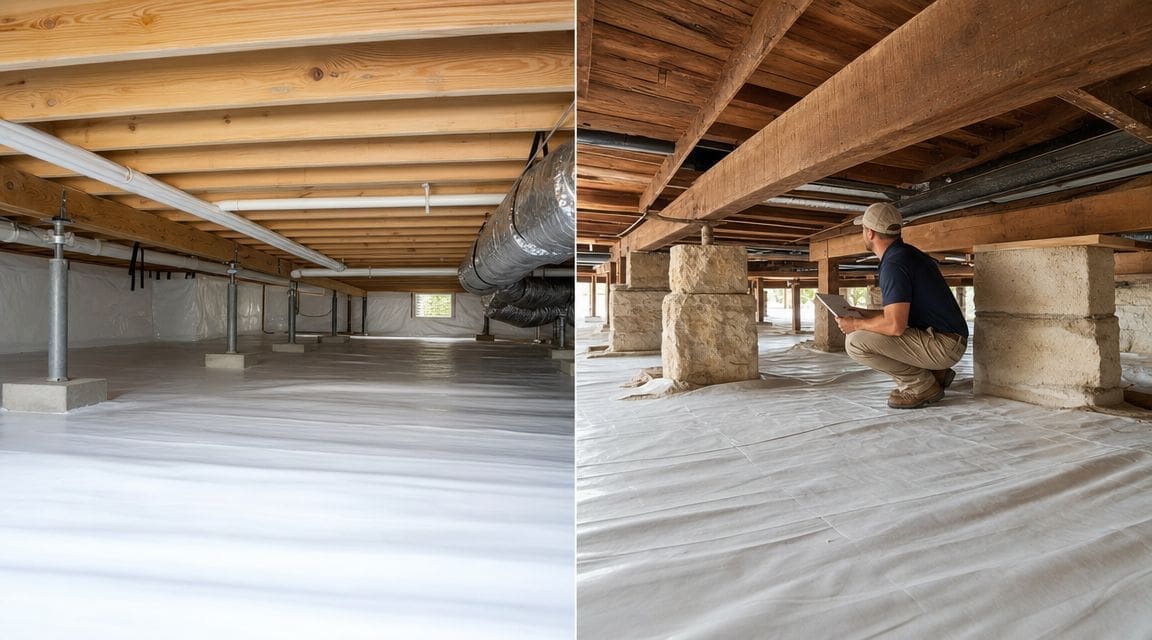
Scenario one Dallas area home with average access
A homeowner in Dallas has a pier and beam house with a crawl space that is fairly easy to enter and move through. There is a light musty smell after rain, and the center hallway feels a little off underfoot. The area under the home needs some prep, but not a major cleanout.
For a home like this, pricing often lands in the middle of the normal range because the crew can work without fighting every inch of the space. If the moisture problem is mostly coming up from the soil, a vapor barrier may be a sensible part of the fix. In North Texas, that matters because expansive clay soils can react when moisture conditions change around and under the home. The barrier does not stop soil movement by itself. It helps reduce one source of moisture stress so the whole foundation protection plan has a better chance of working.
If an inspection also points to movement outside the crawl space, it helps to read a broader Texas homeowner slab repair guide so the moisture issue is viewed in the full context of foundation performance.
Scenario two San Antonio area home with a tighter crawl space
A homeowner near San Antonio has a smaller crawl space, but the opening is narrow, the ground is uneven, and old debris has to come out before any clean installation can begin. The crew also has to fit the barrier carefully around several supports.
That kind of job often costs more than homeowners expect.
The reason is simple. A smaller footprint does not automatically mean less labor. It works like painting a small bathroom with lots of corners versus a big open wall. The smaller job can still take longer because every cut, seam, and movement is slower. In parts of the San Antonio area, soils can also expand and shrink with moisture swings, so the barrier is most useful when it is treated as one layer of protection alongside drainage and any needed foundation corrections.
A national home improvement cost reference from HomeAdvisor's crawl space encapsulation pricing guide shows how crawl space moisture-control projects can vary widely based on size, condition, and labor demands. That lines up with what Texas homeowners usually find during real inspections. Access and prep often push the final number more than square footage alone.
Two homes can look similar on paper and still get very different estimates. One needs a straightforward moisture barrier. The other needs cleanup, detailed fitting, and a wider plan to protect the foundation from the soil and drainage conditions common in Dallas and San Antonio.
That is the part homeowners should keep in mind. The cost is not just for plastic on the ground. It is for reducing moisture exposure now so the home is less likely to face bigger repair bills later.
Your Next Step to a Dry and Stable Foundation
A vapor barrier can be a smart investment. But it works best when homeowners see it for what it is. One piece of a total foundation protection plan.
The main takeaway
In Texas, especially around Dallas and San Antonio, homes deal with shifting soil, drainage swings, and seasonal moisture changes. A vapor barrier helps reduce moisture rising from the crawl space soil, but it doesn't replace drainage corrections, foundation repair, or other steps when the home already shows movement.
That's why the cheapest quote isn't always the best value. A lower number may leave out cleanup, sealing detail, drainage concerns, or the underlying reason the crawl space stays wet in the first place.
A better approach is to ask a few simple questions:
- What is included in the scope: Just material on the ground, or prep and detailed sealing too.
- What moisture source is being addressed: Soil vapor alone, or outside water movement as well.
- Has the foundation already been affected: Cracks, uneven floors, sticking doors, or sagging areas.
- Will this solve the issue once or create another repair later: That question matters more than the lowest initial price.
Why an inspection matters before pricing
The most useful estimate starts with someone looking at the actual conditions under the house. That's the only way to know whether the home needs a basic barrier, more complete moisture control, drainage improvements, or foundation repair.
For homeowners dealing with settling, cracks, uneven floors, or chronic crawl-space moisture, a professional inspection gives the clearest path forward. It turns a vague online price range into an actual plan for the home.
Homeowners in Dallas, San Antonio, and surrounding Texas communities can take the next step by contacting Advanced Foundation Repair to schedule a free inspection. The company repairs existing foundations, including pier and beam issues, slab foundation problems, drainage concerns, soil movement, and root-related pressure. Customers also get added peace of mind because Advanced Foundation Repair is the only foundation repair company in Texas backed by the Texas Foundation Warranty Trust, which protects customers even if the company ever closes.